Tour Details
All-Inclusive Price: $11.950
Single Supplement $1.250
Duration: 31 Days
Price includes:
- Group Size Under 15
- Visa processing and consular fees
- All Meals Everyday (B, L, D)
- Internal Flights and Train Tickets
- All Land Transfers with A/C
- Accompany of guide/escort 24/7
- Handpicked 4–5 Star Hotels for Your Comfort
- Show Programs
- Entrance Fees
- Bottled water
- Private Tour – $1,000 per person in a couple
- 20% Discount on Caucasus Tour for Returning Customers


Hotels:
- Tashkent – City Palace Hotel
- Samarkand – Konstantin Hotel
- Bukhara – Sasha & Son Hotel
- Mary – Mary Hotel
- Ashgabat – Yulduz Hotel
- Dashoguz – Dashoguz Hotel
- Khiva – Asia Khiva Hotel
- Khujent – Parliament Palace Hotel
- Dushanbe – Sheraton Hotel
- Almaty – Rahat Palace Hotel
- Bishkek – Ramada Hotel
- Issyk Kul – Kapriz
- Ulaanbaatar – The Grand Hill Hotel
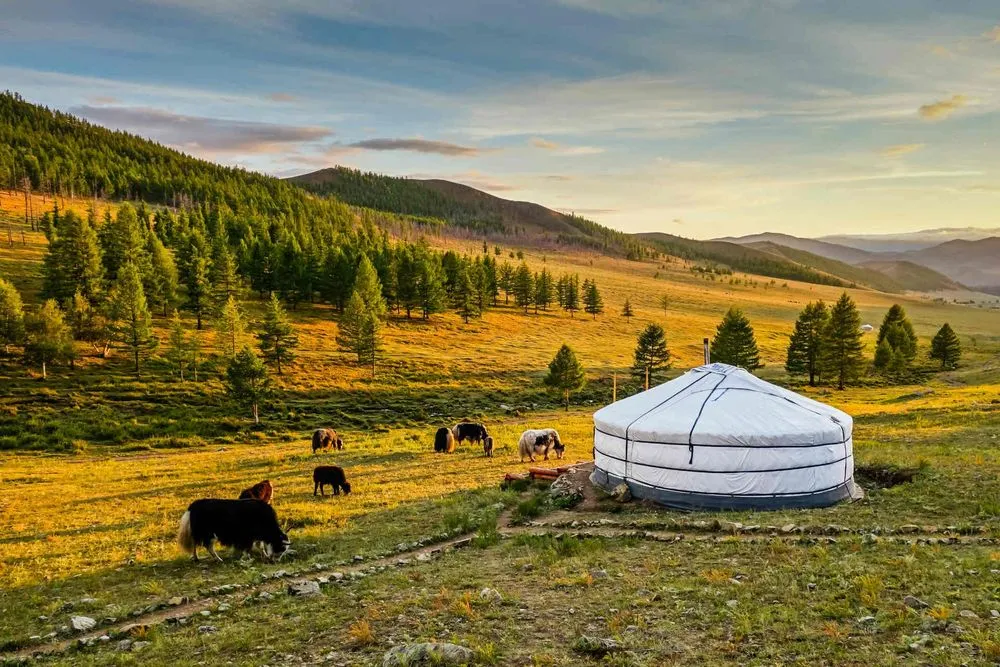
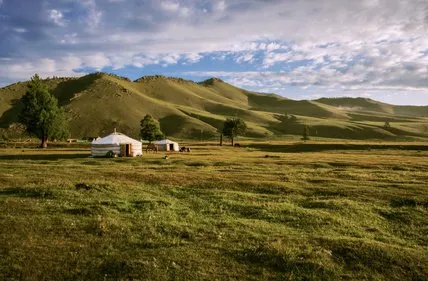
- Hugnu Khan Mt. National Park – Hoyor Zagal Ger camp
- Yol valley in Three beauties – Gobi Nomad Lodge Ger Camp
Contact Us
Fill Out the Form to Get in Touch with Our Team
Day 1 – Arrival to Tashkent (Uzbekistan) + -
Welcome to Uzbekistan! Upon arrival at Tashkent Airport, you’ll be met and transferred to the hotel for check-in and some rest. In the evening at 7 PM, we’ll have a welcome dinner along with a brief introduction to Uzbekistan—one of the most economically developed countries in Central Asia, covering slightly more than 11% of the region’s territory. The main industries of the country include cotton cultivation, silk production, fruit and vegetable farming, and irrigation construction. Overnight stay will be at a hotel in Tashkent.
Day 2 – Tashkent (Uzbekistan) + -
After breakfast, we’ll begin the day with a visit to the old part of Tashkent. Highlights include the Khast Imam Complex, home to the unique Osman Koran, believed to be the oldest Koran in the world, the Chorsu Bazaar, one of the city’s largest and oldest markets, and the Kukeldash Madrasah, an important architectural monument dating back to the 16th century.
After lunch, we’ll explore the modern part of the city. Our tour will include Independence Square (Mustakillik), Tashkent’s main square surrounded by grand public buildings and fountains, and Alisher Navoi Theatre Square, built in 1947 by Japanese prisoners of World War II. We’ll also visit the Amir Temur Museum and the Museum of Handcraft Art to conclude our Tashkent excursion. Dinner will be at a local restaurant, followed by an overnight stay at the hotel in Tashkent.
Day 3 – Tashkent – Samarkand – 190 mi (Uzbekistan) + -
After breakfast, we’ll take a train to the world-famous city of Samarkand, located about 190 miles from Tashkent. The journey passes through Syrdarya and Jizzakh provinces and takes approximately three hours. Upon arrival in Samarkand, we’ll check in to the hotel and have lunch.
After a short rest, we’ll begin our Samarkand excursion, visiting the Paper Mills Factory, where you’ll see a presentation on paper production from mulberry trees, the Afrasiyob Museum, and Ulugbek’s Observatory (built in 1428–1429), once the largest observatory in the East with the most advanced instruments of its time.
Dinner will be at a local restaurant, followed by transfer back to the hotel for an overnight stay in Samarkand.
Day 4 – Samarkand (Uzbekistan) + -
After breakfast, we’ll board a train to the renowned city of Samarkand, located approximately 190 miles from Tashkent. The route passes through Syrdarya and Jizzakh provinces and takes around three hours. Upon arrival, we’ll check in to the hotel and enjoy lunch.
Following a short rest, our Samarkand tour begins with a visit to the Paper Mills Factory to see a demonstration of paper production from mulberry trees, then the Afrasiyob Museum, and Ulugbek’s Observatory (built in 1428–1429), once the largest observatory in the East, equipped with the most advanced instruments of its time.
Dinner will be served at a local restaurant, after which we’ll return to the hotel for an overnight stay in Samarkand.
Day 5 – Samarkand – Bukhara – 172 mi (Uzbekistan) + -
After breakfast at the hotel, we’ll depart Samarkand and drive toward Bukhara. Along the way, we’ll stop at the ruins of the medieval Caravanserai Rabat-i-Malik. Continuing through Gijduvan, we’ll visit Abdulla’s pottery house, where a short presentation will be offered along with a cup of tea.
Upon arrival in Bukhara, we’ll check in to the hotel and visit the Chor Minor Memorial. Dinner will be at a local restaurant, followed by an overnight stay in Bukhara.
Day 6 – Bukhara (Uzbekistan) + -
After breakfast, we’ll enjoy a full day of sightseeing in Bukhara, one of the most historically rich cities on the Great Silk Road, renowned for its unique heritage. Our tour will include the Samanid Dynasty Mausoleum, considered one of the finest examples of Samanid architecture (875–999), the Chashma Ayub Mausoleum, which legend associates with Prophet Job, and the Bolo-Khauz Mosque.
We’ll also visit the Ark Fortress, Bukhara’s oldest monument, dating back to the 3rd century B.C., the Kalon Complex, which includes a minaret, mosque, and madrasa still in use today, the Magoki Attori Mosque, and the Ulugbek and Abdulaziz Khan Madrasahs.
Our afternoon concludes at Lyabi Khauz, the city’s most popular site, a reservoir complex built in 1620 by the khan’s dignitary Nodir Devan Begi. The day will end with dinner at a local restaurant and a cultural show, followed by an overnight stay in Bukhara.
Day 7 – Bukhara – Farab – Turkmenabat – Mary – 290 mi (Uzbekistan/Turkmenistan) + -
After breakfast, we’ll continue with a half-day sightseeing tour of Bukhara, visiting the former summer palace of Emir Said Olimkhan, the last Emir of Bukhara, Sitora-i-Mokhi-Khosa, and the Museum of Decorative Applied Art.
After lunch, we’ll bid farewell to Uzbekistan and drive to the Turkmenistan border, about 1.5 hours away. Upon completing border and customs formalities, we’ll continue our journey to Mary via Turkmenabat, which takes approximately 4.5 hours. On the way, we’ll cross the Floating Bridge, nearly half a mile long, and traverse the Kara Kum Desert (“Black Sand”), one of the largest deserts in the world.
Upon arrival in Mary, we’ll check in to the hotel and enjoy dinner at a local restaurant, followed by an overnight stay in Mary.
Day 8 – Mary – Ashgabat (Turkmenistan) + -
After breakfast, we’ll spend the morning on a half-day sightseeing tour of Bukhara, visiting the former summer palace of Emir Said Olimkhan, the last Emir of Bukhara, Sitora-i-Mokhi-Khosa, and the Museum of Decorative Applied Art.
Following lunch, we’ll say goodbye to Uzbekistan and drive to the Turkmenistan border, roughly 1.5 hours away. After completing border and customs formalities, we’ll continue to Mary via Turkmenabat, a journey of about 4.5 hours. Along the way, we’ll cross the Floating Bridge, nearly half a mile long, and travel across the Kara Kum Desert (“Black Sand”), one of the largest deserts in the world.
Upon arrival in Mary, we’ll check in to the hotel and have dinner at a local restaurant, followed by an overnight stay.
Day 9 – Ashgabat – Nissa – Ashgabat (Turkmenistan) + -
ChatGPT сказал:
After breakfast, we’ll explore Ashgabat, one of the most beautiful cities in the world, recently recognized by the Guinness Book of Records as the “Most-White Marble City.” Our sightseeing will begin with the Complex of Monuments of Oguz Han and Sons, surrounded by fountains, followed by the tombs of Turkmenbashy (first President S. Nyyazow), his parents, and brothers. We’ll then visit Old Nissa, the ancient capital of the Parthian Empire, which lasted 600 years and was Rome’s greatest adversary.
Next, we’ll explore the modern part of Ashgabat, including the Archabil Shayoly Monuments, the Health Path of Turkmenbashy on the mountains, the Monument of Constitution, the tallest building in Turkmenistan (600 feet), and the “Alem” Culture and Recreation Center.
After lunch at a local restaurant, we’ll continue sightseeing with visits to the Museum of Turkmen Carpets, the Park dedicated to Turkmen horses, Gulistan Bazar, the Monument for the Victims of the 1948 Earthquake, the Monument of Lenin, and Ertogrul Gazy Mosque.
In the evening, we’ll enjoy dinner at a local restaurant followed by a night tour along Ashgabat’s main streets, including a stop at the Palace of Happiness, and a folk show program. Overnight will be at the hotel in Ashgabat.
Day 10 – Ashgabat – Dashoguz (Turkmenistan) + -
After breakfast, we’ll enjoy a full day of sightseeing in Ashgabat, starting with the famous “Altyn Asyr” Oriental Bazar and Jygyldyk Bazaar, one of the largest markets in Central Asia. Next, we’ll visit the Hippodrome of Ashgabat to see the renowned Akhalteke horses, a symbol of Turkmen heritage.
Lunch will be at a local restaurant, followed by a visit to the National Museum of History, one of the largest and most impressive museums in Central Asia. Afterward, we’ll explore the Arch of Neutrality, a striking rocket-shaped building symbolizing Turkmenistan’s neutral status, standing over 300 feet tall with a 40-foot rotating statue of the first President, Saparmyrat Nyyazow (Turkmenbashy).
We’ll then enjoy a short walking tour in the Park of Independency, surrounded by hundreds of fountains and statues, stopping at the Monuments of Independency and Ruhnama.
In the late afternoon, we’ll transfer to Ashgabat airport for our flight to Dashoguz on flight T5-109 at 19:20. Upon arrival, we’ll have dinner at a local restaurant, then check in to the hotel for overnight stay in Dashoguz.
Day 11 – Dashoguz – Kunya – Urgench – Khiva – 184 mi (Turkmenistan/Uzbekistan) + -
After breakfast, we’ll begin a full day of sightseeing in Ashgabat, starting with the famous “Altyn Asyr” Oriental Bazar and Jygyldyk Bazaar, one of the largest markets in Central Asia. Next, we’ll visit the Hippodrome of Ashgabat to admire the renowned Akhalteke horses, a symbol of Turkmen heritage.
Lunch will be served at a local restaurant, followed by a visit to the National Museum of History, one of the largest and most impressive museums in Central Asia. We’ll then explore the Arch of Neutrality, a distinctive rocket-shaped building symbolizing Turkmenistan’s neutral status, standing over 300 feet tall with a 40-foot rotating statue of the first President, Saparmyrat Nyyazow (Turkmenbashy).
A short walking tour will follow in the Park of Independency, home to hundreds of fountains and statues, with stops at the Monuments of Independency and Ruhnama.
In the late afternoon, we’ll transfer to Ashgabat Airport for our flight to Dashoguz on T5-109 at 19:20. Upon arrival, we’ll have dinner at a local restaurant and then check in to the hotel for an overnight stay in Dashoguz.
Day 12 – Khiva – Urgench – Tashkent (Uzbekistan) + -
After breakfast at the hotel, we’ll drive approximately 75 miles to Koneurgench, the former capital of the Khorezmshahs, for a half-day sightseeing tour of the Old City. Highlights include the Portal of the Caravanserai, Mamun Minaret, Il Arslan Mausoleum, Sultan Tekesh Mausoleum, Academy of Khorezm, Kutlug Timur Minaret—one of the tallest minarets in Central Asia—and Turabek Hanum Mausoleum.
After the excursion, we’ll drive back to Dashoguz and stop for lunch at a local restaurant. Following lunch, we’ll transfer to the Dashoguz–Shavat border, about 10 miles away, and complete passport control and customs formalities to return to Uzbekistan.
Once through the border, we’ll continue to Khiva, where we’ll check in at the hotel for rest and relaxation. A walk through Ichan Kala, the old walled city of Khiva, will offer insight into life here from ancient times to the present. Dinner will be served at a local restaurant, followed by a show program, and overnight stay will be at the hotel in Khiva.
Day 13 – Tashkent – Khujand – 104 mi (Uzbekistan/Tajikistan) + -
After an early breakfast at the hotel in Tashkent, we’ll depart for a one-day excursion to Tajikistan. We’ll drive to the Oybek border checkpoint, complete passport and customs formalities, and then continue to Khujand, Tajikistan’s second-largest city.
Upon arrival, we’ll check in at the hotel to rest after the long drive, then begin sightseeing. Khujand, located in the Ferghana Valley, is one of Central Asia’s oldest cities, founded over 2,300 years ago during the time of Alexander the Great. It prospered for centuries, building palaces, mosques, and citadels, but was conquered and destroyed by Genghis Khan’s army in the 13th century.
Our sightseeing will include the ancient part of Khujand, featuring Timurmalik Fortress, Archaeology and History Museums, and Panjshanbe Bazaar, one of the most vibrant markets in Central Asia. Nearby, we’ll visit Sheikh Muslihiddin Mosque and Mausoleum and the Museum of Archaeology and Restoration.
The day will conclude with dinner at a local restaurant, and we’ll overnight in Khujand.
Day 14 – Khujand – Dushanbe (Tajikistan) + -
In the morning, we’ll depart Khujand and drive to Dushanbe (approximately 270 km, 5 hours). The route passes through the picturesque Anzob Pass, situated at 3,300 meters above sea level, offering stunning mountain views.
We’ll stop for lunch at a local restaurant along the way. On the route, we’ll visit Mug Tepa, one of the ancient settlements in Tajikistan, believed to have been founded by Kir at the northeastern boundary of his empire.
Next, we’ll explore the Khazrati Shoh architectural complex, which includes:
Khazrati Shoh Mausoleum – the grave of the brother of Kusam ibn Abbas
Khudayar Valami Mausoleum
Namozgoh Mosque
The complex also includes a city cemetery and a madrasa, all dating back to the 19th century.
We’ll also visit a local bazaar, an oriental market where you can find a variety of goods.
We’ll then continue to Dushanbe, where we’ll check in at the hotel for overnight stay.
Day 15 – Dushanbe (Tajikistan) + -
ChatGPT сказал:
We’ll start the day with a half-day sightseeing tour in Dushanbe, beginning with the Museum of National Antiquities, which opened in 2001. The museum showcases artefacts from Tajikistan’s Islamic and pre-Islamic history, including Greek/Bactrian, Zoroastrian, Buddhist, and Hindu relics, highlighting Tajikistan’s historic role as a crossroads of Central Asia. The centerpiece is the 14-meter reclining Buddha of Nirvana, a 1,400-year-old statue crafted by the same Kushan civilization that created the Bamiyan Buddhas in Afghanistan (note: closed on Mondays).
Next, we’ll visit the Botanical Garden, renowned for its old trees and beautiful landscaping, a favorite spot for locals. The city tour continues with visits to the Somoni Monument, the Building of National Spirit, and a stroll along Rudaki Prospect, the main avenue of Dushanbe.
In the afternoon, we’ll drive 23 km to Hissor town to explore the ancient Hissor Fortress, one of Tajikistan’s most precious historical sites. The fortress reflects the traditional elements of power, trade, and culture of the ancient Tajik nation. Here, we’ll visit:
Medrassah Kuhna (16th century) and the Museum of Tajik Way of Life
Nearby 19th-century medrassah
Mausoleum of the Sufi saint Mahdum-i Azam
After the excursions, we’ll return to Dushanbe for dinner at a local restaurant and overnight stay at the hotel.
Day 16 – Dushanbe – Almaty (Tajikistan/Kazakhstan) + -
ChatGPT сказал:
We’ll start the day with breakfast at the hotel and then arrange a transfer to the airport for our flight to Almaty, Kazakhstan at 07:00–09:25.
Welcome to Kazakhstan! Upon arrival at Almaty airport, we’ll be met and transferred to the hotel for check-in and a short rest (approximately 20 minutes’ drive).
In the evening, we’ll enjoy a Welcome Dinner at a local restaurant, during which we’ll introduce Kazakhstan:
The largest country in Central Asia, featuring majestic mountains, glaciers, rivers, lakes, deserts, boundless steppes, and rich forests.
A diverse natural environment that supports a rich variety of flora and fauna.
A rich historical and cultural heritage, including ancient settlements, barrows, petroglyphs, mausoleums, mosques, and other important monuments of Muslim culture.
Kazakhstan as a land of ancient civilizations, home of nomadic tribes, and a significant stretch of the Great Silk Road (1,400 km), with 27,000 recorded antiquity monuments.
Key industries: metallurgy, chemical and mechanical engineering, oil processing, and production of building materials.
After dinner, we’ll return to the hotel for an overnight stay in Almaty.
Day 17 – Almaty (Kazakhstan) + -
After breakfast at the hotel, we’ll enjoy a full day of sightseeing in Almaty. We will start with Panfilov Park, dedicated to the 28 heroes of the Panfilov division, covering about 18 hectares in the northeast part of the city. At its center is the majestic Sacred Voznesensky Cathedral, also known as Zenkov Wooden Cathedral. Next, we’ll visit St. Nicholas Cathedral, a notable historic Orthodox church, followed by the National Musical Instruments Museum named after Ykylas, which was opened in the 1980s and showcases traditional Kazakh instruments, some dating back to the 17th century. In the southern part of the city, we will visit the Central State Museum, which exhibits over 120,000 artifacts tracing Kazakhstan’s history from ancient times to the present. We will also explore Almaty’s Green Bazaar, one of the largest and most authentic Asian markets, and enjoy a panoramic view from the Observatory. Before dinner, we’ll visit a falcon farm with a short show program demonstrating traditional falconry. Dinner will be at a local restaurant, followed by an overnight stay at the hotel in Almaty. Almaty, formerly known as Alma-Ata, is the largest city in Kazakhstan, located in the southeast near the Kyrgyzstan border at an elevation of 670–1,100 meters. It served as the state capital from 1927 to 1997.
Day 18 – Almaty – Bishkek – 170 mi (Kazakhstan/Kyrgyzstan) + -
Today after breakfast at the hotel we will depart Almaty and drive to Bishkek via the newly built highway. The journey, which will take approximately three hours, offers beautiful landscapes along the way. We will provide a brief introduction to Kyrgyzstan, a country located in the northeast of Central Asia, crossed by two major mountain systems, the Tien Shan and the Pamir. About 93% of Kyrgyzstan is covered by mountains, and the country experiences a strong continental climate, with an average elevation of 350 meters above sea level. In the afternoon, we will arrive in Bishkek, the capital of Kyrgyzstan, check in to the hotel for a short rest, and have lunch at a local restaurant. In the second part of the day, we will explore Bishkek, visiting the Central Museum, Panfilov Park, and the local bazaar. Dinner will be at a local restaurant followed by a folk show program, and we will overnight at the hotel in Bishkek.
Day 19 – Bishkek – Issyk Kul – 165 mi (Kyrgyzstan) + -
After breakfast at the hotel we will transfer to Issyk Kul Lake, the pearl of Kyrgyzstan. On the way, we will visit Burana Tower, located in the city of Tokmok, about 50 miles from Bishkek. Lunch will be with a local Kyrgyz family in Tokmok city. After lunch, we will continue our drive to Issyk Kul Lake through Boom Canyon. Issyk Kul is one of the largest mountain lakes in the world and the most beautiful lake in Kyrgyzstan, situated in the northeast of the country between the Kungey Ala and Terskey Ala ridges of the Northern Tien Shan at an elevation of 1,609 meters above sea level. Excursions will include visiting Paleolithic-era petroglyphs and the local museum in Cholpon Ata. Upon arrival, we will check into the hotel and have dinner at a local restaurant. Overnight will be at the hotel near Issyk Kul Lake.
Day 20 – Issyk Kul – Chopon Ata – Grigorevka Gorge – Bishkek – 163mi (Kyrgyzstan) + -
After breakfast at the hotel we will transfer to Grigorevka Gorge, located about 45 miles from the city of Cholpon-Ata. The gentle slopes of the valley are covered with dense fir forest, and the valley stretches for 25 miles. Grigorevka Gorge is considered one of the most picturesque in the Issyk Kul area. Today will be a relaxing day in nature. After lunch at a local restaurant we will return to Bishkek. Overnight will be at the hotel in Bishkek.
Day 21 – Bishkek – Ulaanbaatar (Kyrgyzstan/Mongolia) + -
After an early transfer to the airport, we will take flight TK342 at 04:15, arriving in Ulaanbaatar at 10:05 AM. Upon arrival, your tour guide will meet you at the arrivals hall and assist with transfer to the hotel and check-in. The rest of the day will be free for you to relax, recover from the long flight, and adjust to any jet lag.
Day 22 – Ulaanbaatar (Mongolia) + -
After breakfast, at 9:00 am we will begin a guided city sightseeing tour of Ulaanbaatar, starting with Gandan Buddhist Monastery, Mongolia’s largest functioning monastery and home to the Mongolian Buddhist University. The highlight of the visit is the 26-meter-high gilded indoor statue of Megjid Janraisig. Next, we will visit the Museum of Mongolian National History, which presents Mongolia’s history and culture from prehistoric times to the present.
Lunch will be at the “Modern Nomads” restaurant, serving traditional Mongolian cuisine. After lunch, we will visit Sukhbaatar Square (Chinggis Square), located at the heart of the city and surrounded by important buildings such as the government palace, banks, theaters, and post office. The square features an equestrian statue of Sukhbaatar and a massive bronze statue of Chinggis Khan with his four warriors in front of the Parliament House.
Next, we will visit the Bogd Khan Palace Museum, the former residence of the 8th Bogd Javzandamba, head of Mongolian Buddhism in the 19th century. The complex includes seven summer prayer temples and the winter palace. In the evening, we will attend the “Wonders of Mongolia” folklore show performed by the famous Tumen-Ekh ensemble, known for sharing traditional Mongolian music worldwide. After the show, we will return to the hotel for dinner and overnight stay.
Day 23 – Ulaanbaatar – Yol Valley – Mt. National Park (Mongolia) + -
In the early morning, you will be transferred to the city airport for a flight to the Gobi Desert, which takes approximately 1.5 hours. Upon arrival at the local airport, your Gobi tour guide will meet you and drive you to Yol Valley, located within the “Three Beauties of Gobi” Mountain National Park. Yol, meaning Lammergeyer, is named after one of the most endangered birds of prey in the region.
The valley is famous for its deep ice field, which remains frozen for most of the year except in late summer. Here, you will enjoy a gentle hike through grassy meadows, along small streams, and through the long, narrow valley sheltered by high cliffs. Sunlight bounces off the striking rock formations, many covered with wildflowers and unique Gobi plants. With some luck, you may spot wild sheep and goats grazing on the cliffs.
After the hike, you will have lunch and check in at the Gobi Nomad Lodge. The rest of the day is free to relax, take a walk, or explore the surrounding area at your own pace.
Day 24 – Hugnu Khan Mt. National Park – Bayanzag Gobi (Mongolia) + -
If you wake up early this morning, you will have the opportunity to witness the sunrise over the Gobi Desert. After breakfast, we will drive approximately 1.5 hours to Bayanzag, famous for the first discovery of fossilized dinosaur eggs. Bayanzag is also known for its striking red cliffs, formed by wind and water erosion, which appear like flames rising in the desert from a distance.
At the Mongol Gobi Ger Camp, we will watch an informative video about Roy Chapman Andrews and the American expedition that discovered the first dinosaur eggs at Bayanzag and transported dinosaur skeletons across the desert on camelback. Their discoveries proved to the world that dinosaurs laid eggs.
After lunch, we will explore the Flaming Cliffs, wandering among the red rock formations and searching for dinosaur bones, which are still occasionally found in the area today. At the end of the day, we will return to the lodge for dinner and overnight stay.
Day 24 – Hugnu Khan Mt. National Park – Bayanzag Gobi (Mongolia) + -
If you wake up early this morning, you will have the chance to watch the sunrise over the Gobi Desert. After breakfast, we will drive about 1.5 hours to Bayanzag, famous as the site where fossilized dinosaur eggs were first discovered. The area is also known for its striking red hillocks, shaped by wind and water erosion, which appear like flames rising from the desert.
At Mongol Gobi Ger Camp, we will watch an engaging video about Roy Chapman Andrews and the American expedition that uncovered the first dinosaur eggs at Bayanzag and transported dinosaur skeletons across the Gobi Desert on camelback. Their discoveries proved that dinosaurs laid eggs.
After lunch, we will explore the Flaming Cliffs, wandering among the red hillocks and searching for dinosaur bones, which are still occasionally found in the area today. At the end of the day, we will return to the lodge for dinner and overnight stay.
Day 26 – Ulaannaatar – Hugnu Khan Mt. National Park (Mongolia) + -
In the morning at 8 am, our trip begins to Hugnu Khan National Park, a picturesque area where rocky mountains, semi-desert, Gobi sand dunes, and steppes converge, representing three distinct natural zones. After arriving and checking in at the Ger camp near the park, we will have lunch and then explore the surroundings. The area is ideal for gentle hiking, wildlife observation, and photography. We will also visit Uvgun Monastery, traveling through the semi-desert and striking rocky mountains, enjoying the beautiful mountain scenery along the way.
Day 27 – Hugnu Khan Mt. National Park – Bayan Gobi – Karakorum (Mongolia) + -
After breakfast, we will take a short drive to Bayan Gobi, a magnificent sand dune surrounded by hills with willow trees, streams, and bushes, appearing as a small desert in the center of the country. The sand dune stretches 80 km in length, with the widest part measuring 9–10 km. We will explore the dunes and visit a local camel herder family in their Ger, experiencing their unique nomadic lifestyle and having the chance to try Hormog, fermented Mongolian camel milk.
We will then continue driving to a small village and one of Mongolia’s major tourist destinations, historically known as Karakorum, the ancient capital of the Mongol Empire and an important city along the Silk Road. In the afternoon, we will visit the Karakorum museum, which offers an excellent presentation of the archaeological research conducted at the site and Mongol history before and after the town’s occupation. The museum displays artifacts uncovered by various expeditions and a scale model of the town before its destruction. Karakorum was founded in the 13th century by Genghis Khan and later moved to Khanbalig (modern Beijing) by Kublai Khan, the founder of the Mongol (Yuan) dynasty in China.
Next, we will visit the Erdene Zuu Monastery, the oldest and most magnificent Buddhist complex in Mongolia, built in the 16th century with 108 stupas. Here, you can listen to monks chanting Buddhist sutras. In the evening, we will return to the Ger camp for dinner and overnight stay.
Day 28 – Karakorum – Hustai National Park & Wild Horse Park - Ulaanbaatar (Mongolia) + -
After breakfast, we will drive back to Ulaanbaatar, stopping en route at Hustai National Park. The park is home to the last wild horses in their natural environment, known as Przewalski horses or takhi. Hustai National Park also hosts over 450 species of vascular plants, including around 200 medicinal species.
In the afternoon, we will explore the park to observe the wild horses and take photographs of these rare and endangered animals. If you are fortunate, you may also spot foxes, deer, marmots, eagles, and other wildlife. The park offers stunning landscapes combining mountains and open steppe, providing an excellent opportunity to experience the beauty of Mongolian nature. Dinner will be served at the hotel restaurant.
Day 29 – Ulaanbaatar (Mongolia) + -
Today, we will attend the opening ceremony of the Naadam Festival at Ulaanbaatar National Stadium, Mongolia’s biggest and most colorful annual cultural event. The festival centers on three traditional sports: horse racing, Mongolian-style wrestling, and archery, all rooted in the skills of Genghis Khan’s legendary warriors.
At 8am, we will be picked up from the hotel and first visit the stadium for the ankle-bone shooting competition. Next, we will go to the archery field, where men and women in colorful ethnic costumes will demonstrate their skill with bow and arrow. Outside the stadium, we will wander through areas filled with locals in traditional attire, food stalls, and trading corners, experiencing the vibrant atmosphere of the festival.
We will then enter the main stadium for the opening ceremony of the Naadam Festival, followed by the first part of the Mongolian national wrestling tournament. In the standard 512-wrestler competition, there are nine elimination rounds held over two days.
After lunch, we will drive about an hour out of the city to Hui Doloon Hudag, the horse racing field for the festival. Here we will witness children riding bareback across the steppe, representing competitors from all corners of Mongolia. The races feature 150–200 horses and offer a spectacular opportunity to photograph local horse trainers, participants in traditional dress, and the dynamic scenes of the festival.
At the end of the day, we will return to Ulaanbaatar for dinner at a local restaurant and transfer back to the hotel.
Day 30 – Ulaanbaatar (Mongolia) + -
At 9am, we will drive for approximately 2 hours to the Genghis Khan Statue Complex, home to the world’s largest equestrian statue at 40 meters high. The base of the statue features a recreation area with restaurants and souvenir shops. Visitors can either take an elevator or walk through the chest and neck of the horse to reach the head, where a panoramic view of the complex and surrounding area can be enjoyed.
After visiting the statue, we will continue to Terelj National Park, one of Mongolia’s most popular national parks, known for its extraordinary rock formations, including the famous Turtle Rock. Following lunch at a Ger camp, we will explore the park further and visit Ariyabal meditation temple, perched atop a mountain and surrounded by dramatic rock formations. The hike to the temple is considered a ritual to cleanse one’s sins, and from the top, there are breathtaking views overlooking Terelj National Park.
We will also visit a local nomadic family to experience traditional countryside life, which has remained largely unchanged for centuries. Here, you can assist the herders with daily tasks and gain insight into the nomadic lifestyle alongside their livestock.
Day 31 – Ulaanbaatar (Mongolia) + -
As your memorable journey comes to an end, you will be transferred to the airport for your flight to your next destination or home, taking with you the unforgettable experiences and memories from your travels.
Recent Reviews:
Thank you for advising us to go to the Caucasus. It was well worth the time and money. We learned a lot and had a lot of fun. We visited a lot of religious places on this tour, which was mainly the reason we took the tour, and felt like the tour very not only informative, but also spiritual.
Danielle Harris
We were on Caucasus tour this year in June, and loved the destination. Being neighboring countries, we did feel contrast and it only made the tour interesting. Mountains were all around and it was magnificent. Food was so good, I gained 7 pounds by the time we returned home. Hotels were outstanding, with comfortable beds and good breakfast. 3 different guide who were with us in each country were professional and fun. Drivers were very careful and helping. Don't think twice, go with East Site to the Caucasus, next year we'll go to the 5 Stans.
Sarah Thompson
With was our second time traveling this East Site, last year we were on 5 Stans tour, this year we decided to continue on with Caucasus. It was just as good. Our favorite part of it was Georgia. Beautiful nature, people, monasteries, 13 days flew by fast, and we didn't want it to end. Sightseeing was very relaxing, yet informative. We took tons of pictures on this trip. May is perfect for this tour. Thank you!
Christopher Martinez